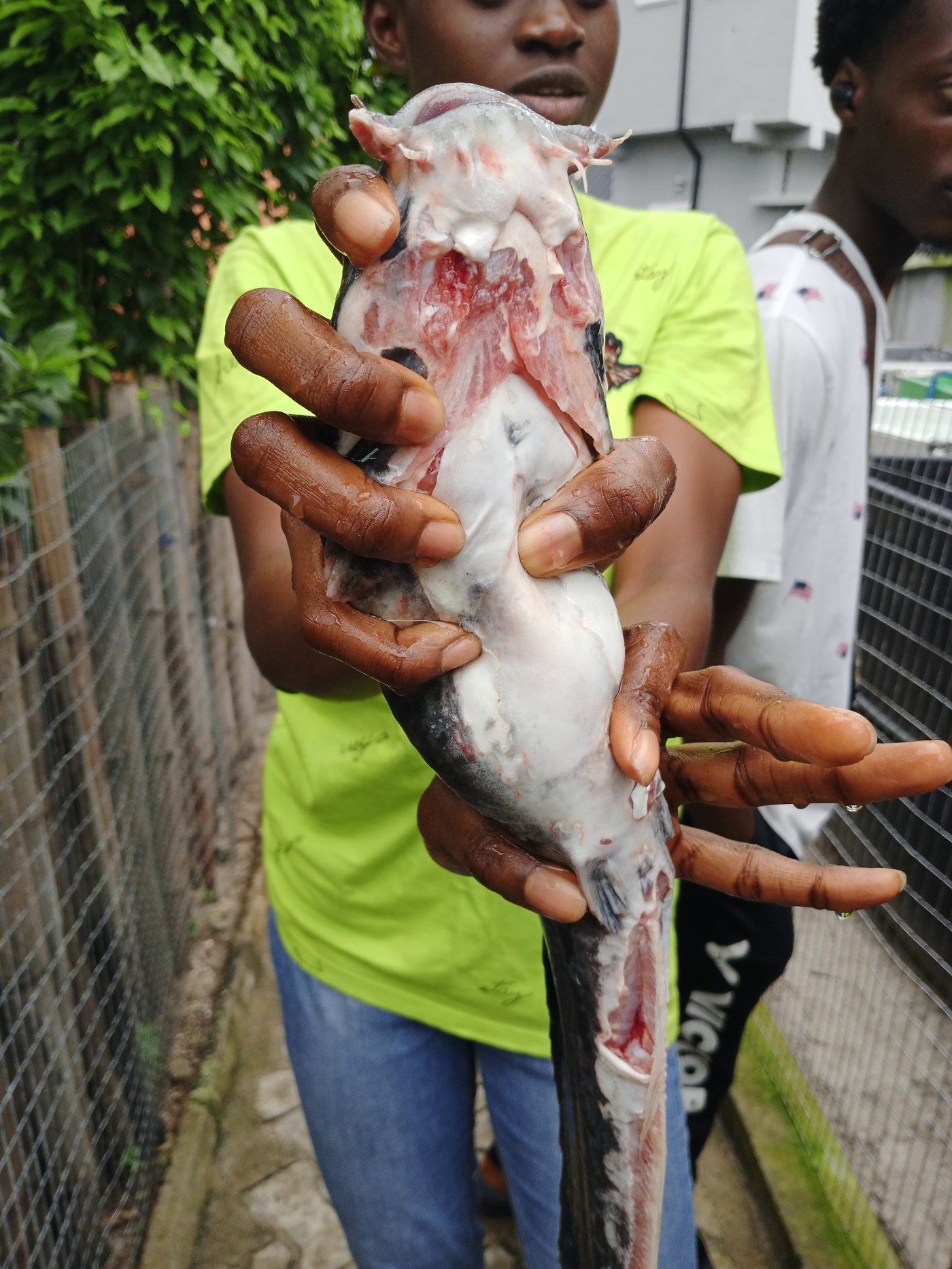
Like many other Catfish species, the African Catfish (Clarias gariepinus) is a renowned cannibal. Fortunately, there are available measures that can prevent and reduce cannibalism in Catfish culture systems.
Over the years, Catfish has gained worldwide popularity in aquaculture along with other fishes like Carp, Salmon, and Tilapia. In Nigeria, the African Catfish (Clarias gariepinus) is arguably the most popularly farmed fish.
The African Catfish has a range aquacultural benefits on it’s side. However, cannibalism remains a major undesirable characteristic. As early as the fry stage, the African Catfish can start displaying cannibalism especially if conditions are inconvenient.
Cannibalism in aquaculture systems can affect production but there are solutions. In this article, we will explore the causes of cannibalism and it’s effect on Catfish farming. We will also discuss how to prevent catfish cannibalism.
What is Cannibalism in Fisheries?
In fisheries, cannibalism refers to fish eating other members of their species. This phenomenon occurs both in the wild and in aquaculture. According to Smith and Reay (1991), cannibalism has been identified in about 36 fish families.
The air-breathing Catfish (Clariidae) is one of the noted cannibalistic fish families. Amongst the Clariidae family, the African Catfish (Clarias gariepinus) has a well-documented behavior of cannibalism.
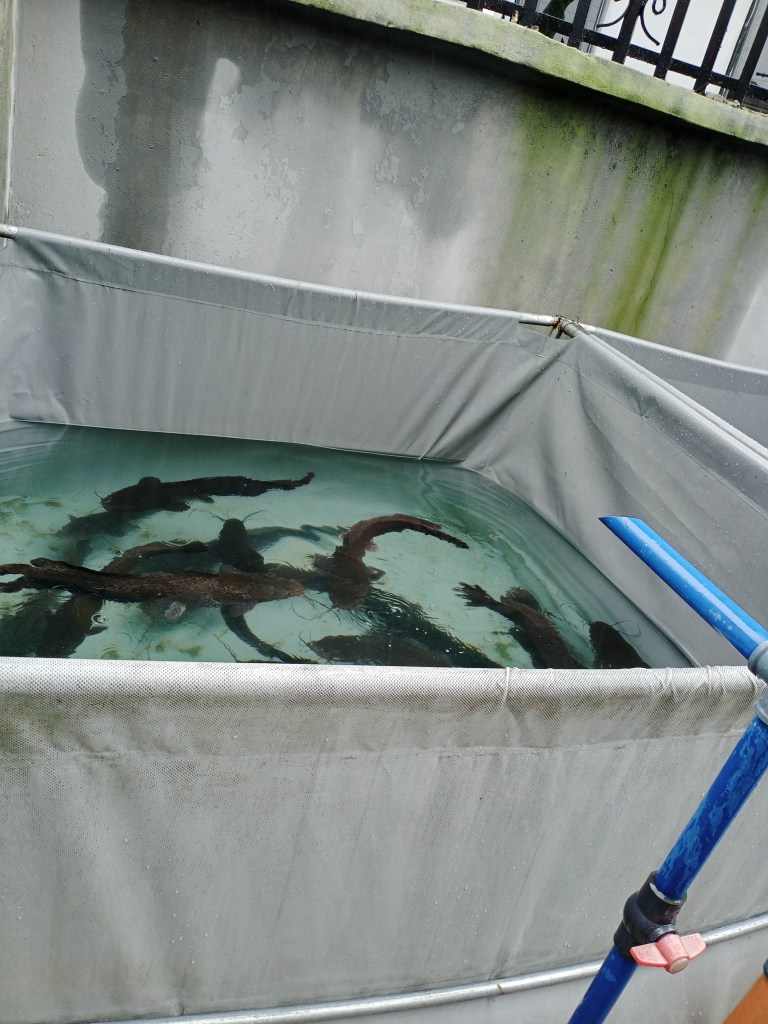
In the context of fisheries management and aquaculture, cannibalism can pose a threat to the fish population’s health, growth, and overall productivity.
Is Cannibalism Natural in Catfish?
Yes, cannibalism is natural in some Catfish species. Generally, there’s a perception that Catfish are aggressive. In a way, the belief is true. Many Catfish species are indeed aggressive.
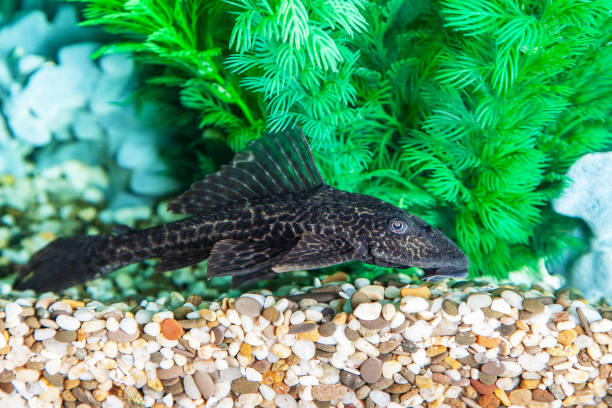
However, there are other non-aggressive Catfish species such as the Pleco (Hypostomus plecostomus). Unlike the the African Catfish, Plecos are not cannibals.
From the fry stage, young African Catfish compete with each other for space and feed. As they compete, the bigger individuals feed on the smaller and weaker ones.
The bigger fish in the pond use their jaws and teeth attack the weaker Catfish. These attacks results in flesh injuries and missing body parts. In a case I witnessed at the farm, the catfish lost its pectoral fins and barbels to cannibalism.
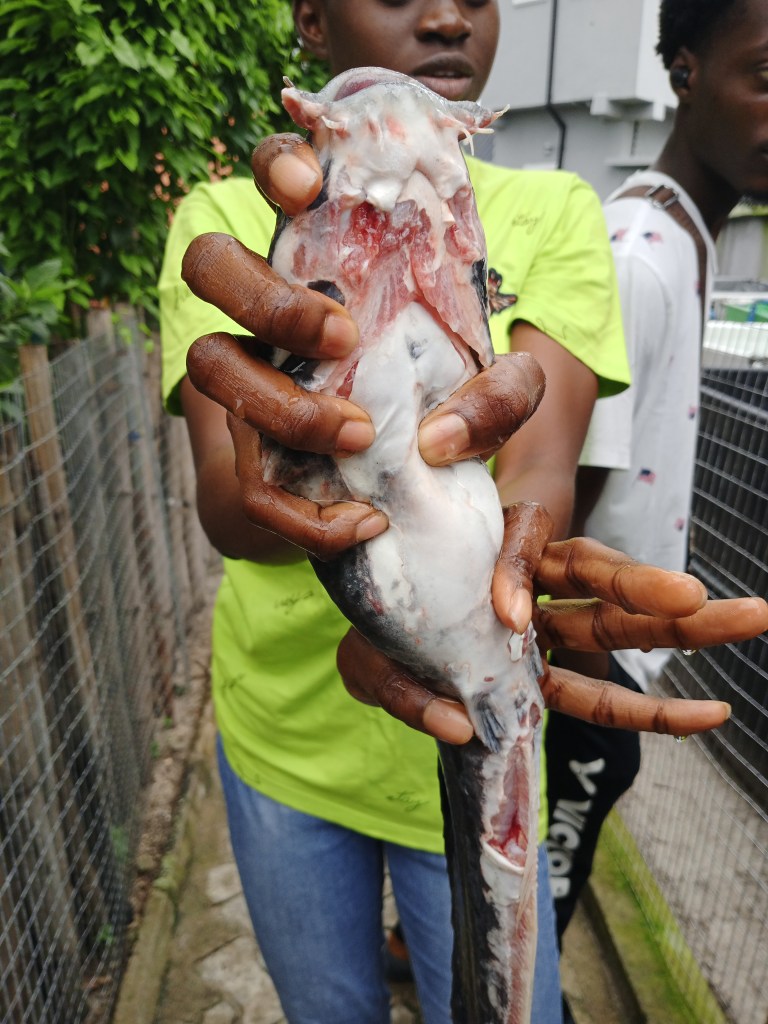
Without intervention, the attacking fish will eat all of the prey’s flesh. The prey’s skeleton will then be left to rot in the pond. However, if a case of cannibalism is noticed on time, the affected fish can be isolated and nurtured back to health.
What Causes Cannibalism in Catfish Farming?
While cannibalism is natural to the African Catfish, it’s occurrence and frequency can be influenced by external factors. The following are some causes of cannibalism in Catfish farming.
1. Pond Overstocking:
In aquaculture, the term ‘stocking density’ refers to the number of fish per unit volume of water. Based on the stocking density calculation, every culture medium an ideal amount of fish it can accommodate.
When the number of fish in a pond exceeds it’s carrying capacity, we say the pond is overstocked. Like other animals, fishes need space for optimal growth and health. Limited space in the pond leads to competition for resources.
In aggressive fish species like the African Catfish, pond overstocking will eventually trigger cannibalism.
2. Size Disparity:
After hatching, individuals in the same cohort do not grow at the same rate. In the case of the African Catfish, some fry are dominant. As a result, the dominant set eat more feed and grow bigger than others. The dominant set are referred to as “shooters.”
As the shooters grow bigger, the fish population’s size disparity becomes noticable. If the fish farmer doesn’t make any corrective action, the fish sizes will get more unequal.
The presence of two different fish sizes (the bigger and the smaller ones) in one pond is a common trigger of cannibalism. Usually, the bigger fish will attack the smaller ones.
3. Poor Feeding Practices:
As a major input in aquaculture, feed is critical to fish growth and health. Apart from the feed itself, the feeding practices play a major role in fish growth patterns and behavior. The feeding practices under discussion include feeding routine and methods.
When rearing fish, it is important to establish a feeding routine. Inconsistent supply of feed leads to competition for scarce resources. The competition then gives rise to cannibalism in Catfish.
The feeding method a farmer uses to distribute feed can also cause cannibalism. Of all the feeding methods known, broadcasting ensures better and even distribution of feed.
4. Stress:
In an aggressive fish specie like the African Catfish, stress can cause irritation and cannibalism. Stress-induced cannibalism usually occur as a result of several stressors.
Some of these stressors are overstocking, poor water quality, and inadequate feeding. Fishes also experience stress due to transportation and poor handling.
When individuals in a Catfish culture medium are under stress, they get aggravated and attack each other. This type of cannibalism can also be seen in poultry birds.
How Can We Prevent Cannibalism in Catfish?
To prevent cannibalism in Catfish farming, the farmer has to to strategize and take steps to improve farm operations and management. The following are steps that would help prevent and reduce cannibalism in Catfish farming.
1. Avoid Overstocking:
The first step in preventing cannibalism is to balance the stocking density. As we have established earlier, overstocking leads to cannibalism. On the other hand, low stocking density minimizes production potential.
For the best results, always stock a balanced amount of fish in the culture medium. To calculate the stocking density, divide the number of fish by the total area of the pond.
When calculating pond stocking density, factors like fish size, water quality, species-specific requirements, and water change frequency should be considered.
2. Practice Regular Sorting:
In Catfish farming, sorting is a necessary management practice. The term ‘sorting’ describes the separation of fish by certain characteristics. The characteristic in Catfish sorting is usually size.
From regular observation, the farmer should be able to assess the condition of the stock. Are some individuals noticably larger than others? Are there any visual signs of cannibalism? Do you observe any aggressive behavior in the culture medium?
These are questions a farmer should ask themself during routine assessments. If the answer to any of the questions above is YES, then it is time for sorting. Ideally, the sorting interval for African Catfish fry and juveniles is weekly.
3. Establish a Feeding Regime
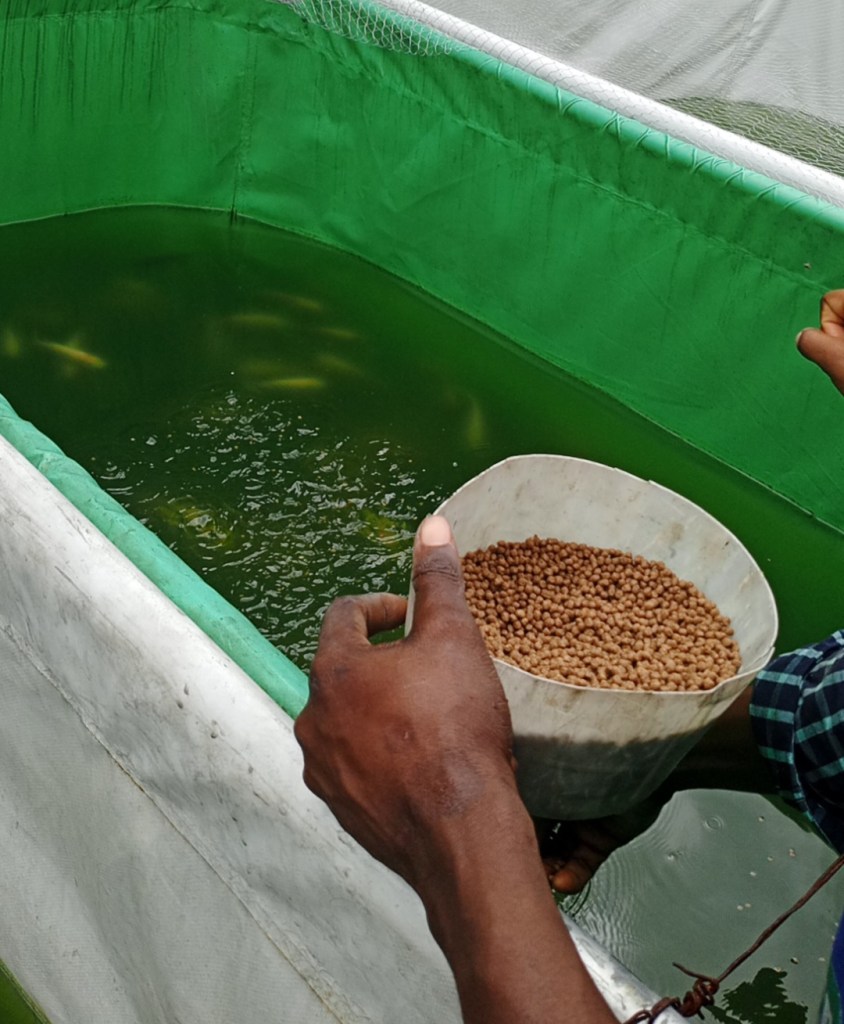
Establishing a feeding regime or system involves consideration for the feeding strategy, frequency, and distribution. Feeding fish to satiation generally reduces aggression.
Also, feeding should be frequent depending on the the fish life stage, the culture medium, and the management objectives. The feed itself should be distributed in a way that benefits all the fish in the pond. As mentioned earlier, broadcasting feeding method is preferable because it ensures even distribution of feed.
The availability of feed has an inverse relationship with cannibalism. When there’s a regular feeding practice in place, the chances of cannibalism notably reduce. Live food supplementation can also reduce cannibalism in juvenile African Catfish (Solomon and Udoji, 2011).
Effects of Cannibalism on Aquaculture Business
The goal of aquaculture is to meet market demand for fish products and reduce the strain on wild fisheries while making profit. Cannibalism counteracts that goal by decreasing the survival rates of farmed fish.
One of the setbacks African Catfish farmers face is harvesting way less fish than they stocked. Some African Catfish farmers lose about 10% of their stock to cannibalism. These losses translate into low production yield and little or no profit.
The open wounds caused by cannibalistic behavior also serve as points of entry for pathogens. These pathogens cause diseases and increase the cost of production as the farmers use extra resources for disease management.
What do you think about the African Catfish’s cannibalistic behavior?
 AquaCessa
Leave a comment